
When you are preparing a ‘go bag’ for bushfire threats, what do you pack?
In my case – along with the usual passport, clothes, medications, phone chargers etc – I pack a plastic container full of dried beans.
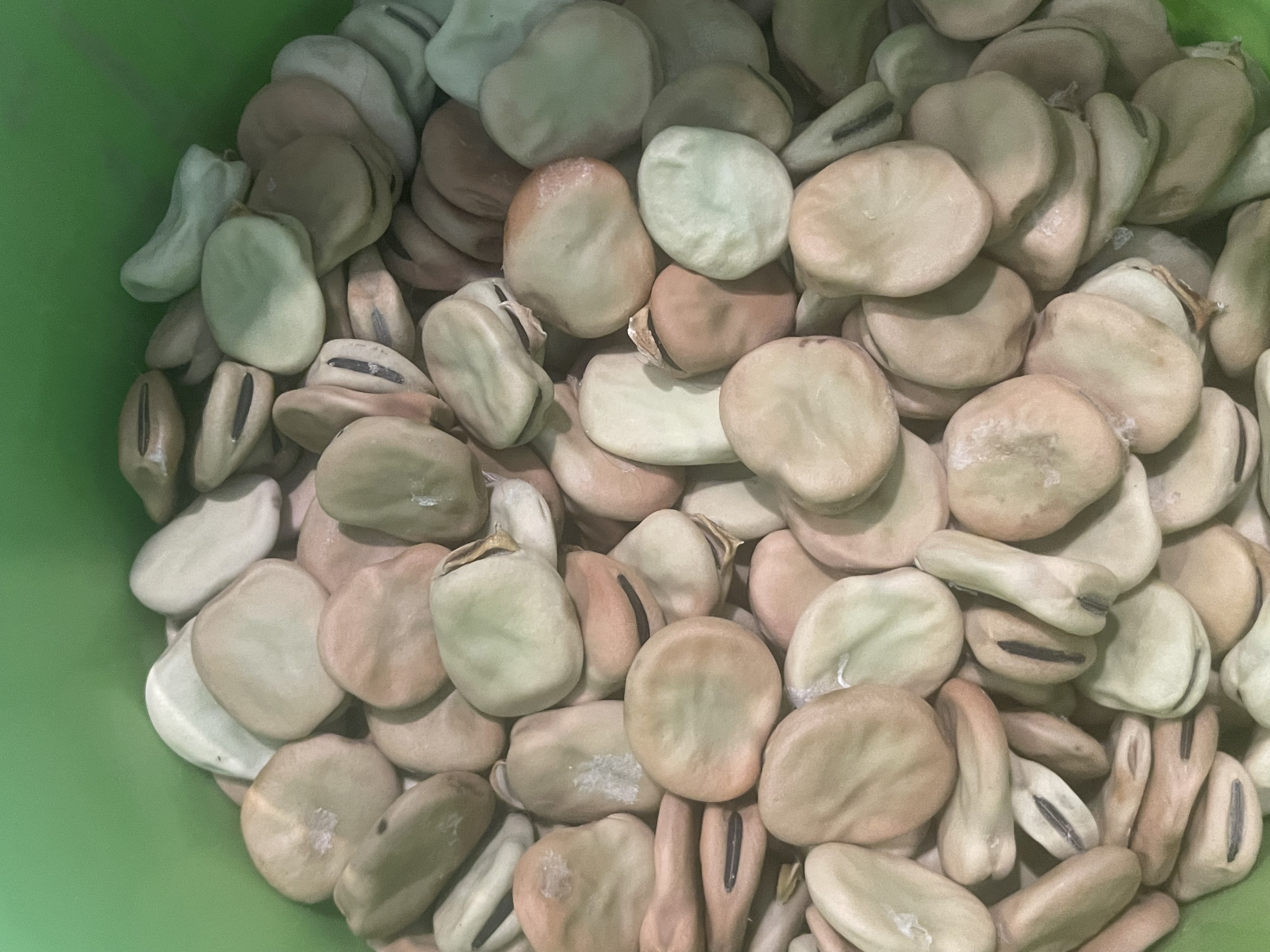 Let me explain.
Sixteen years ago I started an experiment.
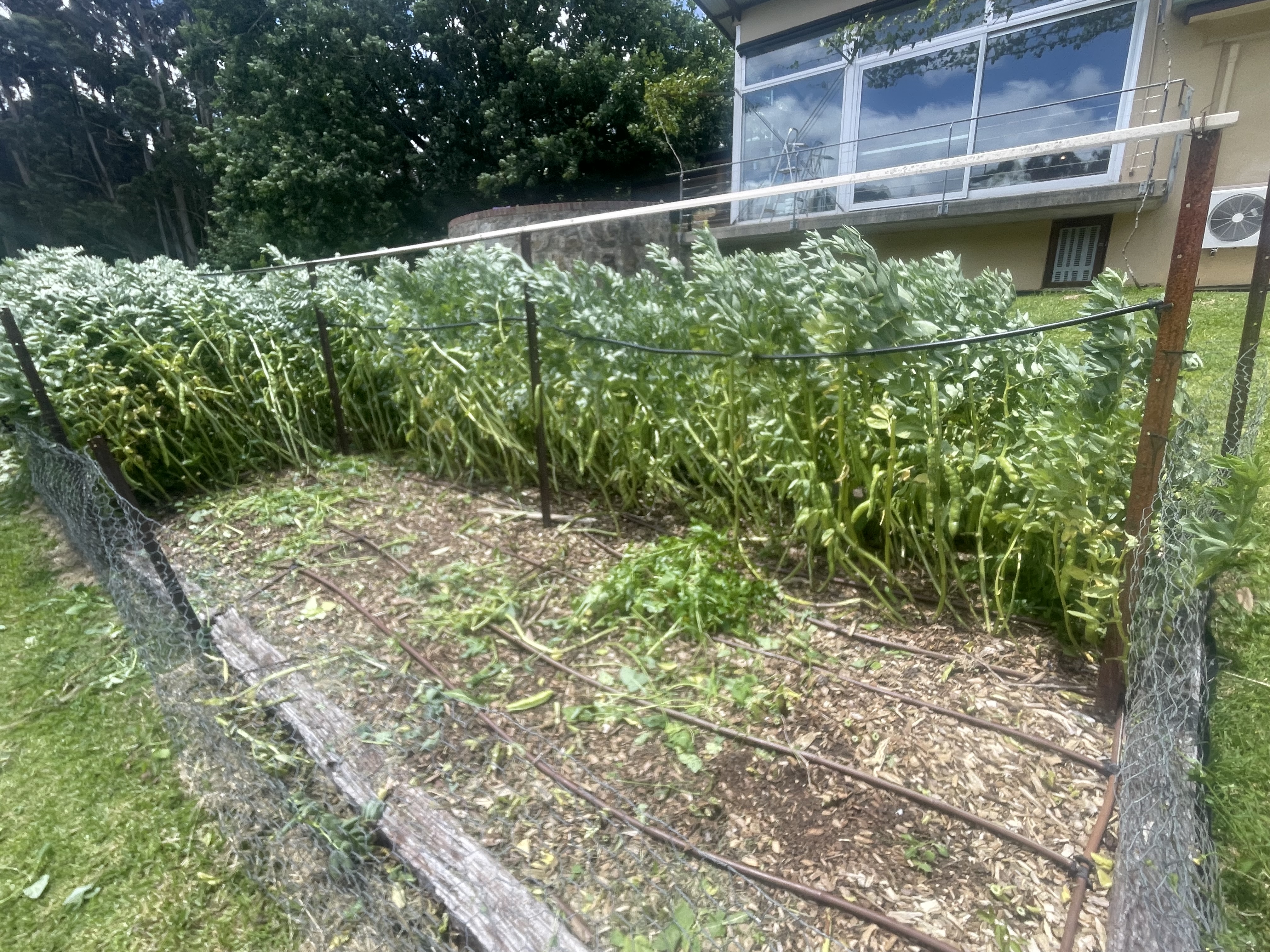
I didn’t know it was going to be an experiment at the time: I thought I was just growing a small crop of winter broad beans in an under-used vegetable patch.
Our local feed store sells broad bean seeds by the kilogram, scooped out of an open-topped barrel. So in 2009 I bought a small scoop – maybe 200g of seeds – which I planted in the coldest months of the year.
In early summer, as expected, I harvested a few kilograms of broad beans.
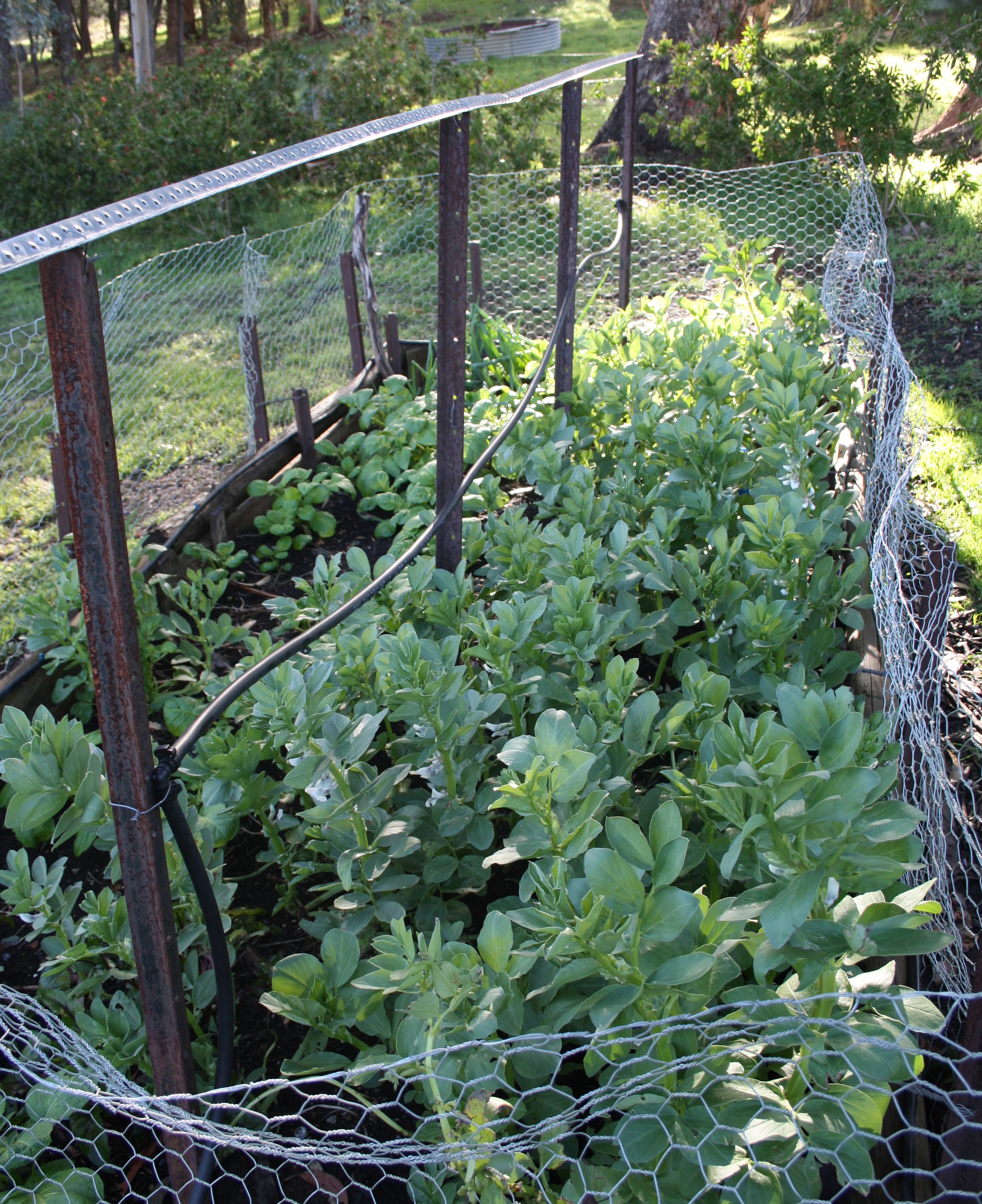
2009 – my first broad bean crop.
What happened next – which triggered the experiment – is not surprising. It’s what humans have been doing for 10,000-odd years in many parts of the world.
I chose the biggest and best-looking pods, with the most beans, for the next year’s planting. The best pods typically had four beans each, or very occasionally five. I dried them out on the window sill, and the following winter I planted them.
In subsequent years I did the same thing. I chose the biggest pods with the most beans for planting, and ate the rest.
Fast forward a few years. The size of the broad bean crop harvested from the same vegetable patch has increased markedly from year to year – I now harvest more than 25kg of shelled beans each year.
More interesting (at least to my mind) is that each year the average number of beans per pod has noticeably increased.
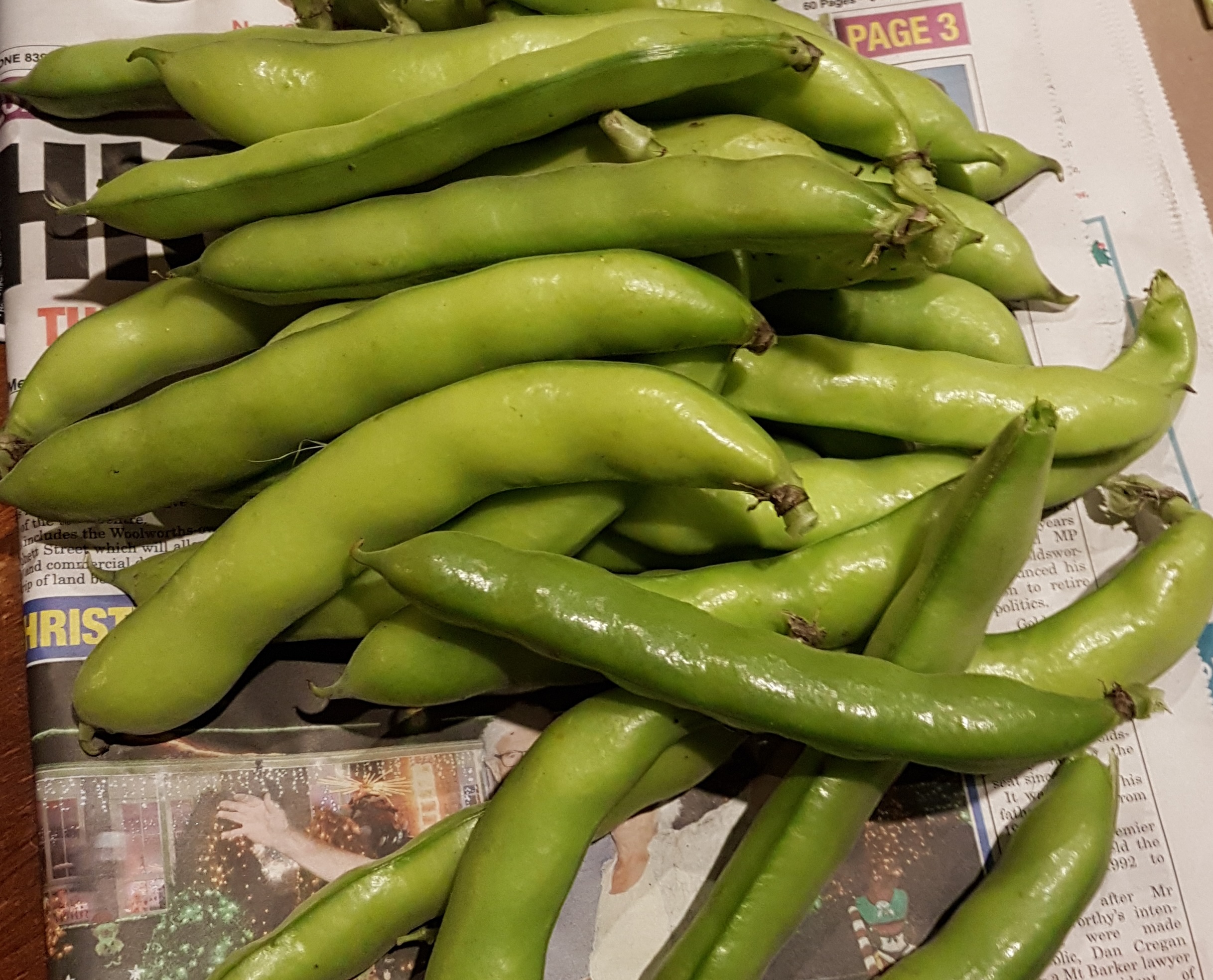
2017 – A few six-bean pods.
Within a few years I was keeping only five-bean pods, and the occasional six-bean pods which started appearing. By the early 2020s I was keeping only six-bean pods, and the occasional sevens.
In the winter of 2025 half the crop I planted was from seven-bean pods. And when I harvested them, I had more than enough seeds from seven-bean pods for all of the upcoming 2026 planting.
Most excitingly, in 2025 I harvested my first ever eight-bean pod.
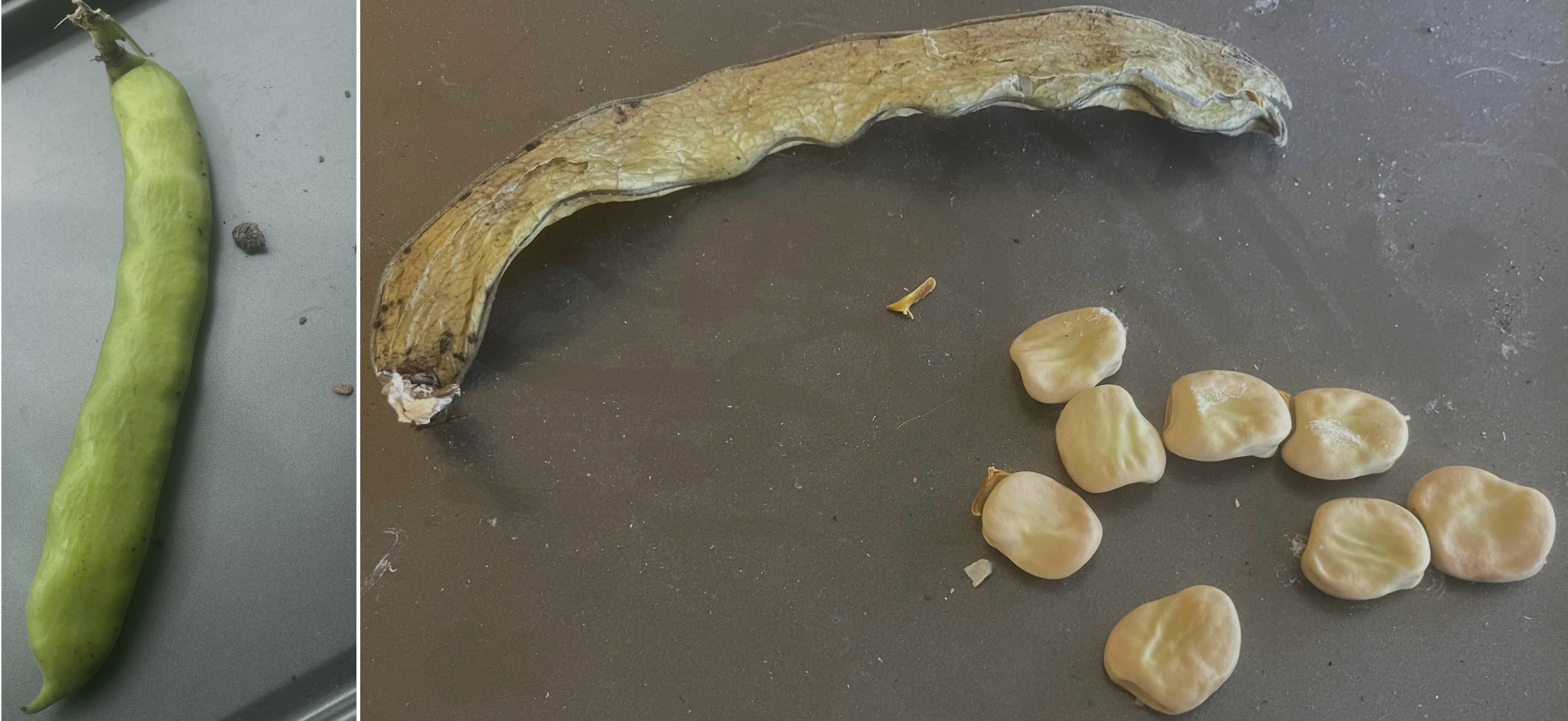
2025 – My first-ever eight-bean pod.
My experiment is actually pointless, because Google tells me there are named varieties of broad bean which routinely produce seven- and sometimes eight-bean pods. So I could have short-circuited the whole 16-year experiment and just bought one of those varieties to start with.
But where would be the fun in that?
I don’t know what the Plant Variety Rights rules are, but I have tentatively named my amateur strain of broad bean seeds ‘Aldgate Valley Long Pod’.
Can I push it further? Can I reach nine-bean pods? Or even 10? How many years planting broad beans do I have left in me?
 ‘Bean day’ for all the family
One consequence of growing so many beans, is that it is a lot of work shelling them.
Most of the shelled beans I blanche, bag and freeze for use over coming months. Which is also a lot of work.
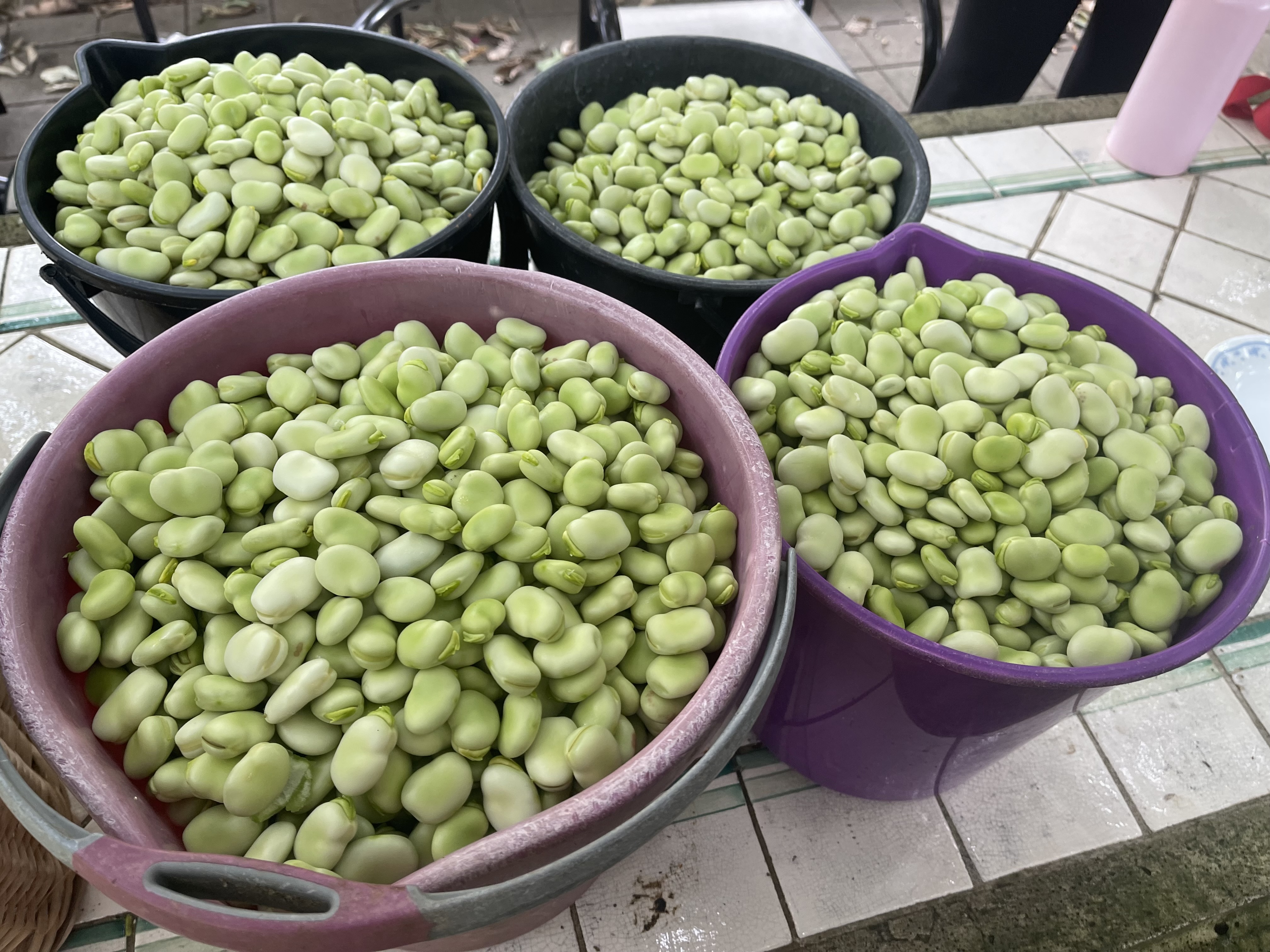 Each year I enlist my family and sometimes friends to help with the shelling and blanching. My wife Chris, who is a far better organiser than I am, has designed a kind of production line. If there are enough people (about six) it takes about three hours.
It is quite a big commitment, so I have tried to make an event of it.
Each year I declare a ‘Bean Day’, usually in the first week of December. I invite any willing family and friends to come over and have a lovely time sitting at the outside table chatting and shelling beans, then jostling around in the kitchen blanching and bagging them.
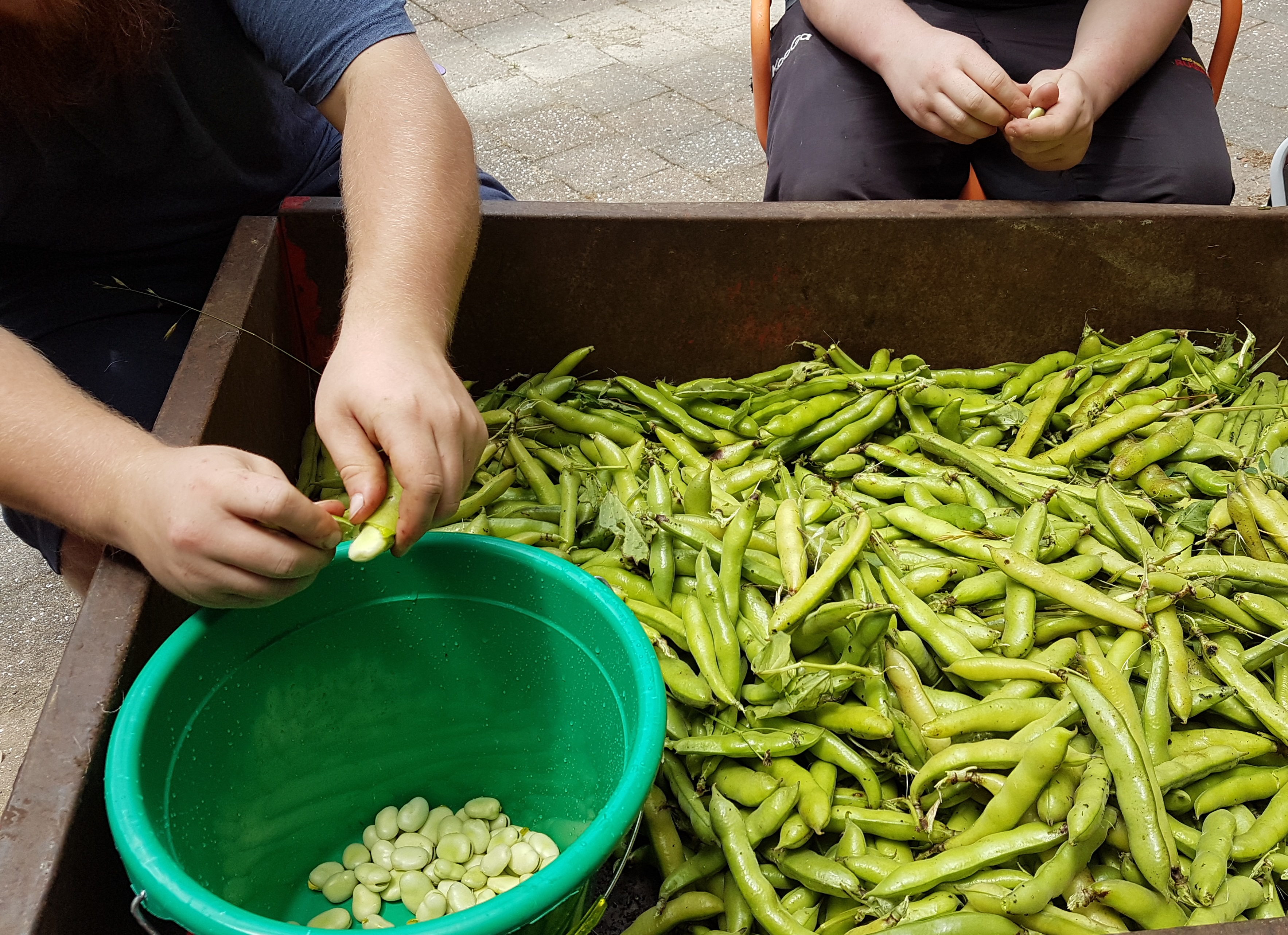
2022 – ‘Bean Day’, so much fun for nearly everyone.
Or at least I have lovely time. I love seeing them all. I love the banter and inter-generational stories over the shared task.
Bean Day is one of my favourite days of the year.
However, Chris has unkindly observed that no-one other than our children has ever volunteered more than once for Bean Day. She has hinted it might sound like a lot more fun than it actually is.
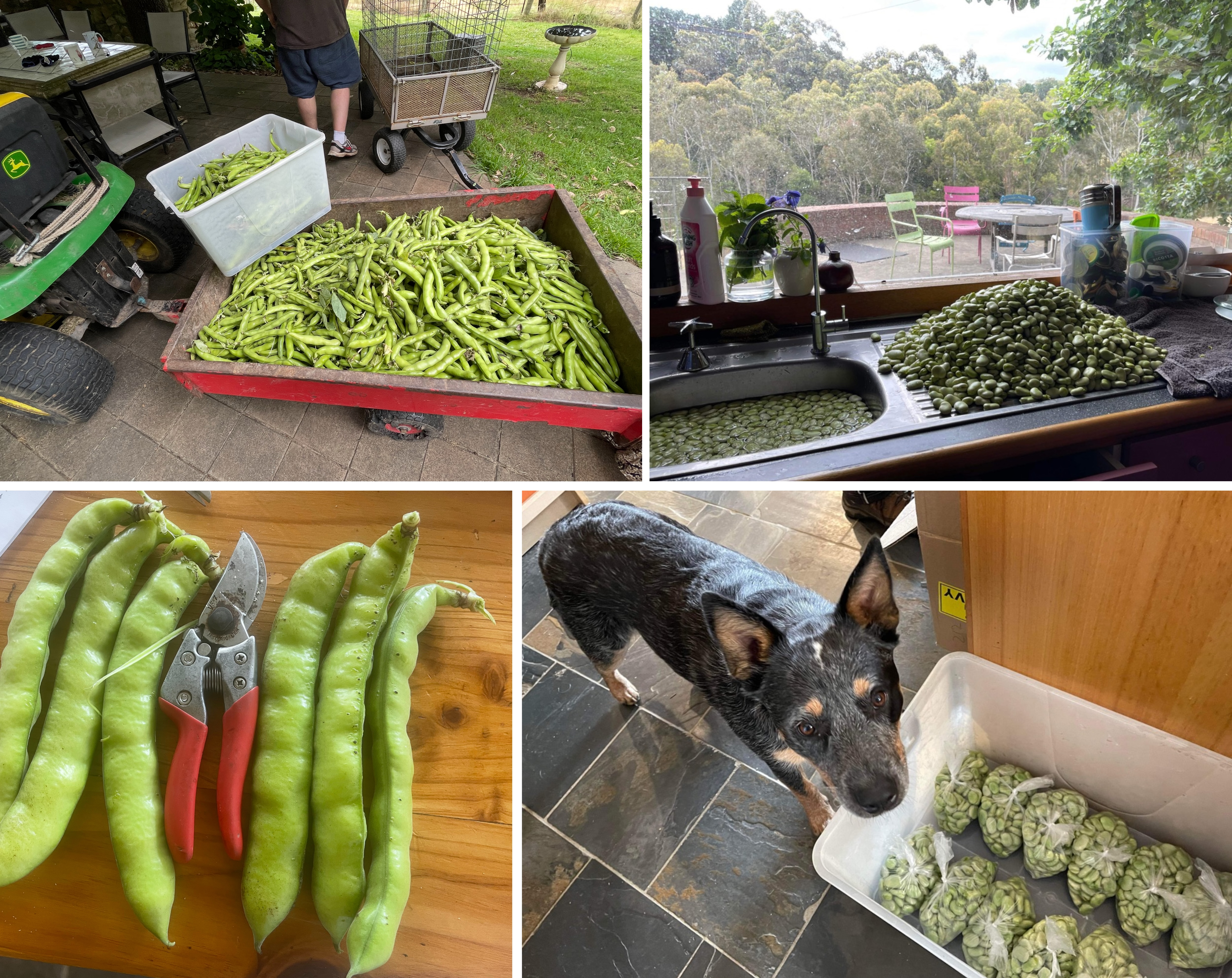
I accept that it may get harder and harder to find Bean Day volunteers in the future, but I am undeterred.
Then it’s the pumpkin’s turn…
Over time, I have worked out a crop rotation system for the broad bean patch. As soon as the beans are harvested, I plant butternut pumpkin seedlings – also grown from saved seeds – which have just enough time to flourish and ripen before the following winter.
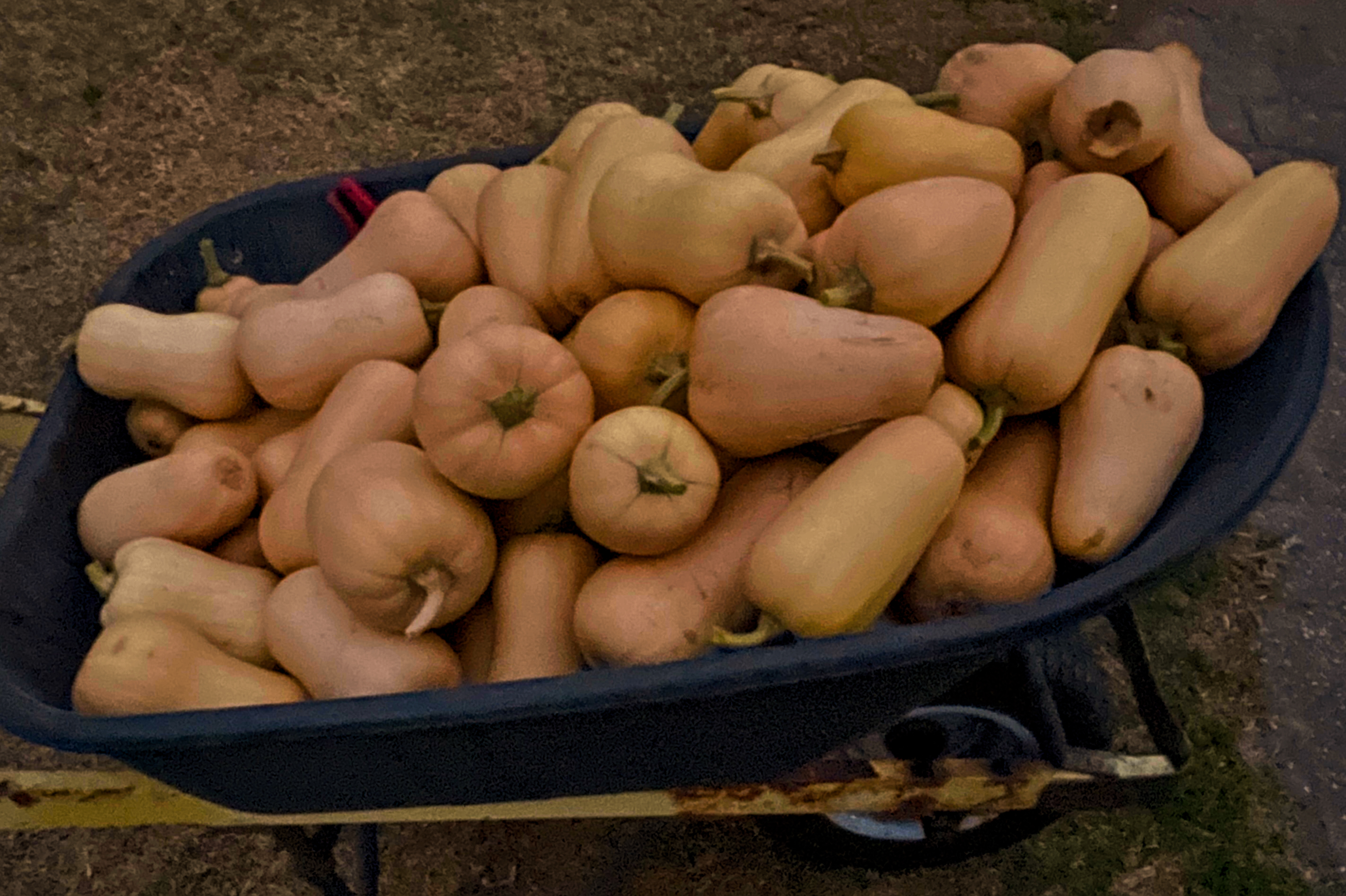
2025 – butternut harvest.
Typically I harvest about 50 butternuts and 25kg of beans from the same patch, year after year. That gives me a year’s supply of both for our household, with plenty to give away.
I do try to save seeds from the biggest butternuts every year, but I can’t say I have seen any difference in the annual pumpkin bounty.
So when we decide to evacuate for bushfire or catastrophic weather, the container of beans will come with me – in the hope that there will be a garden to plant them in when the danger has passed.
And if anyone wants to play along at home, I have plenty of spare broad bean seeds…
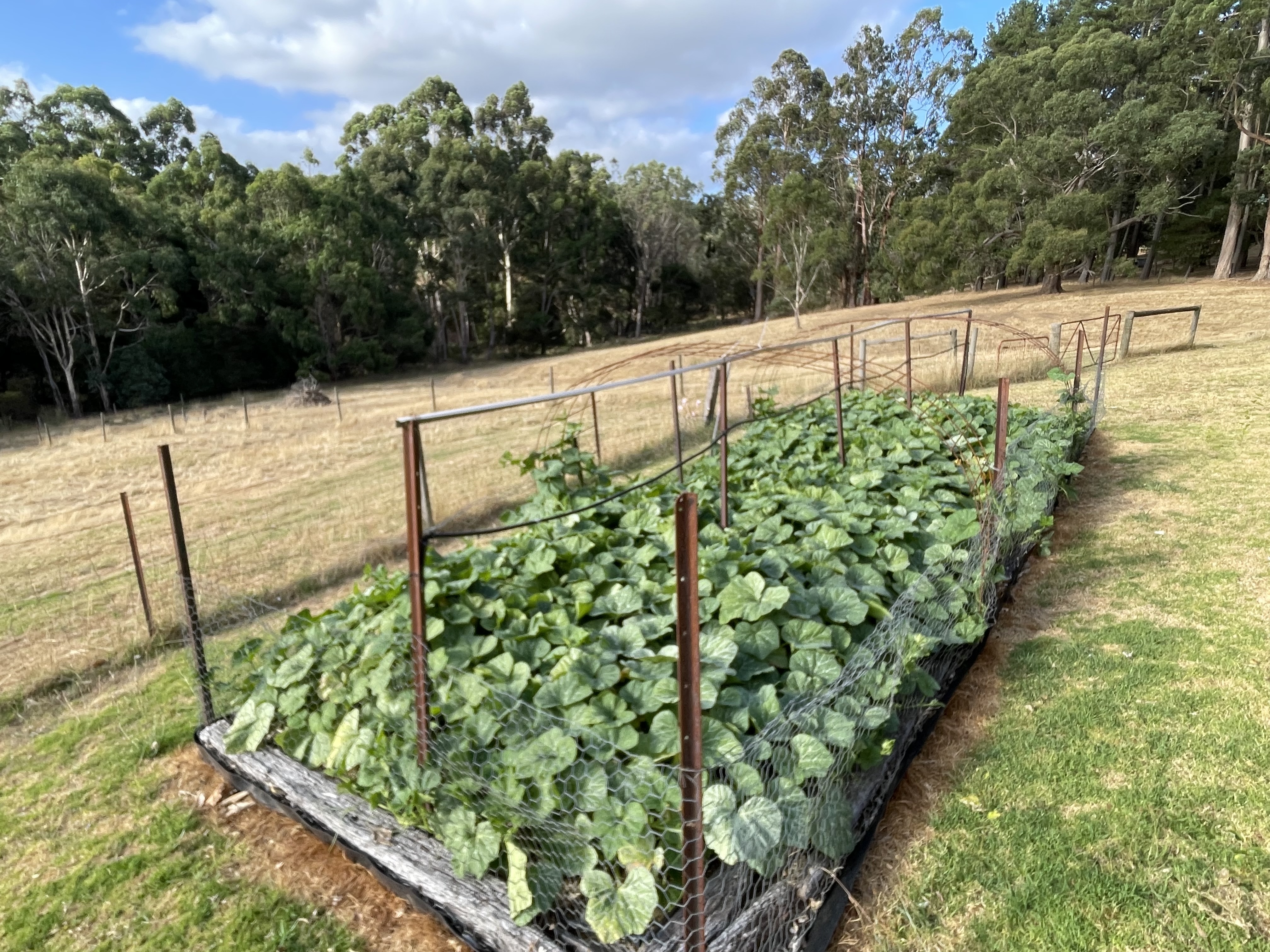
February 2026: Butternuts growing in the broad bean bed, to be harvested in autumn.
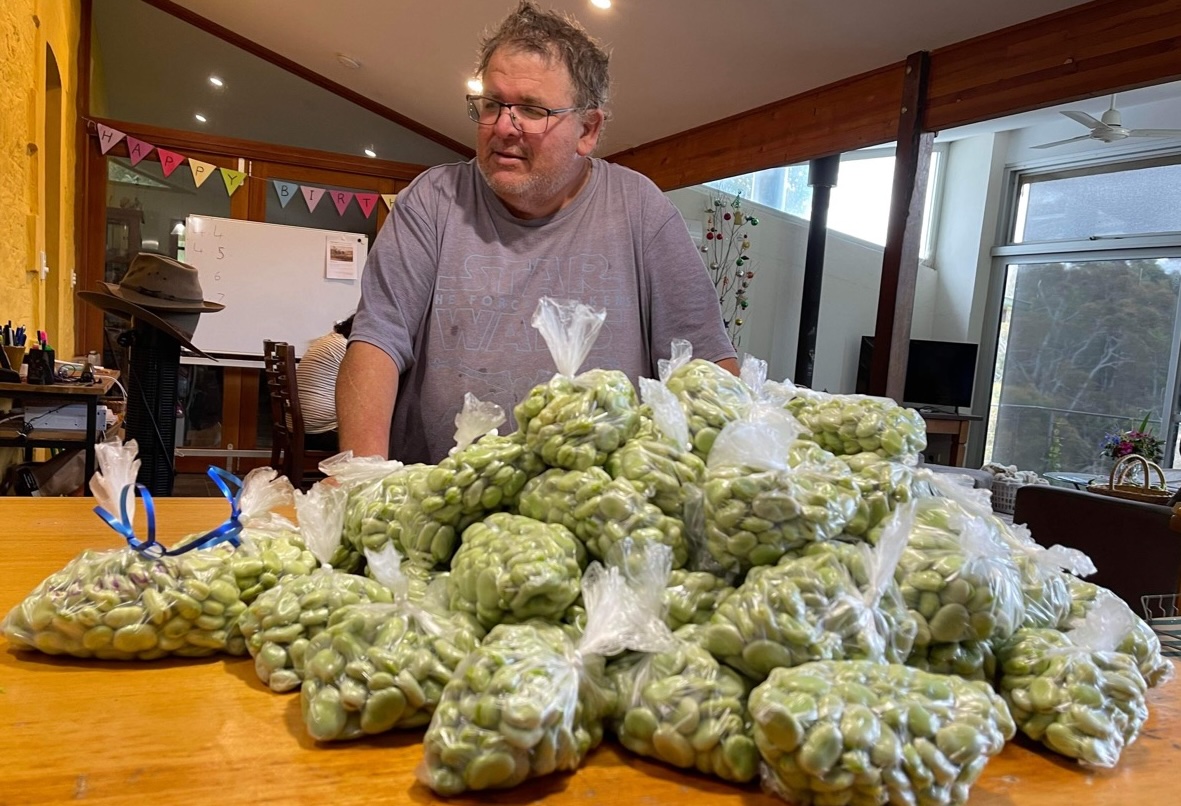
A hill of beans.


 oldmanure
I love this story. Also it makes me tired because as a gardener I know it is so much work. And I don’t even plants veggies.